Why feather shuttlecocks are billed by volumetric weight on air couriers—and exact cm, kg, CBM and 20GP/40HQ container figures to plan landed cost before ordering.
How many shuttlecocks are in one tube and why dimensions matter
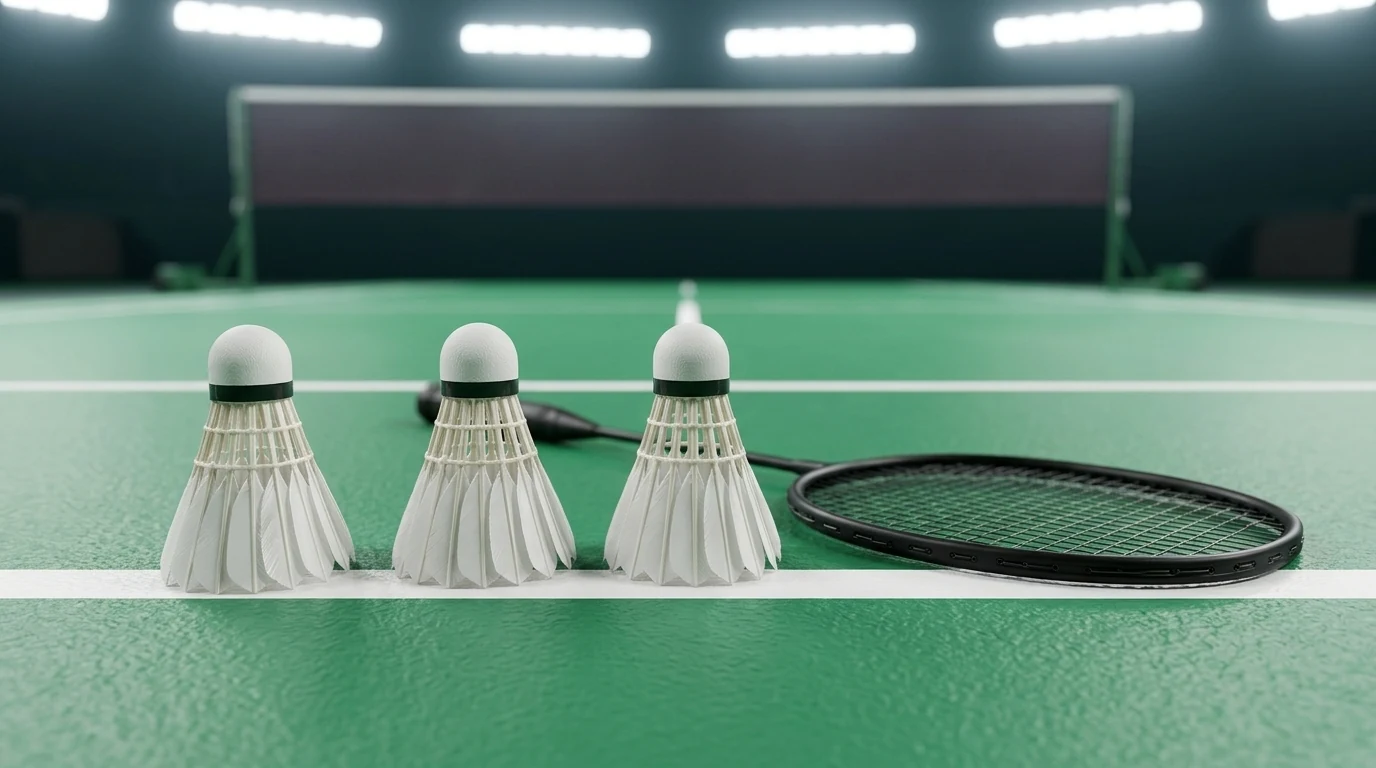
Every international B2B feather shuttlecock tube contains 12 shuttlecocks (1 dozen) stacked nose-to-skirt inside a 39.5 cm × 6.6 cm foil-lined paper cylinder. Half-dozen 6-piece retail tubes exist for casual supermarkets, but wholesale export pricing and master cartons (50 tubes = 600 shuttlecocks) always standardize on 12-shuttle tubes under HS code 9506.69.
02 / VOLUMETRIC WEIGHT TRAP
Why an 11 kg shuttlecock carton is billed as 19.2 kg by air couriers
Because feather skirts enclose air, shuttlecock cartons are lightweight yet bulky. A 50-tube carton weighs only ~11 kg on a scale, but at 67 × 35 × 41 cm its air courier dimensional weight is (67 × 35 × 41) ÷ 5,000 = 19.23 kg—nearly 75% higher than actual scale weight. Once an order reaches 5–10 cartons (0.5–1.0 CBM), shifting to LCL sea freight or DDP sea-truck cuts landed freight per tube dramatically.
03 / CONSOLIDATING DENSE ITEMS
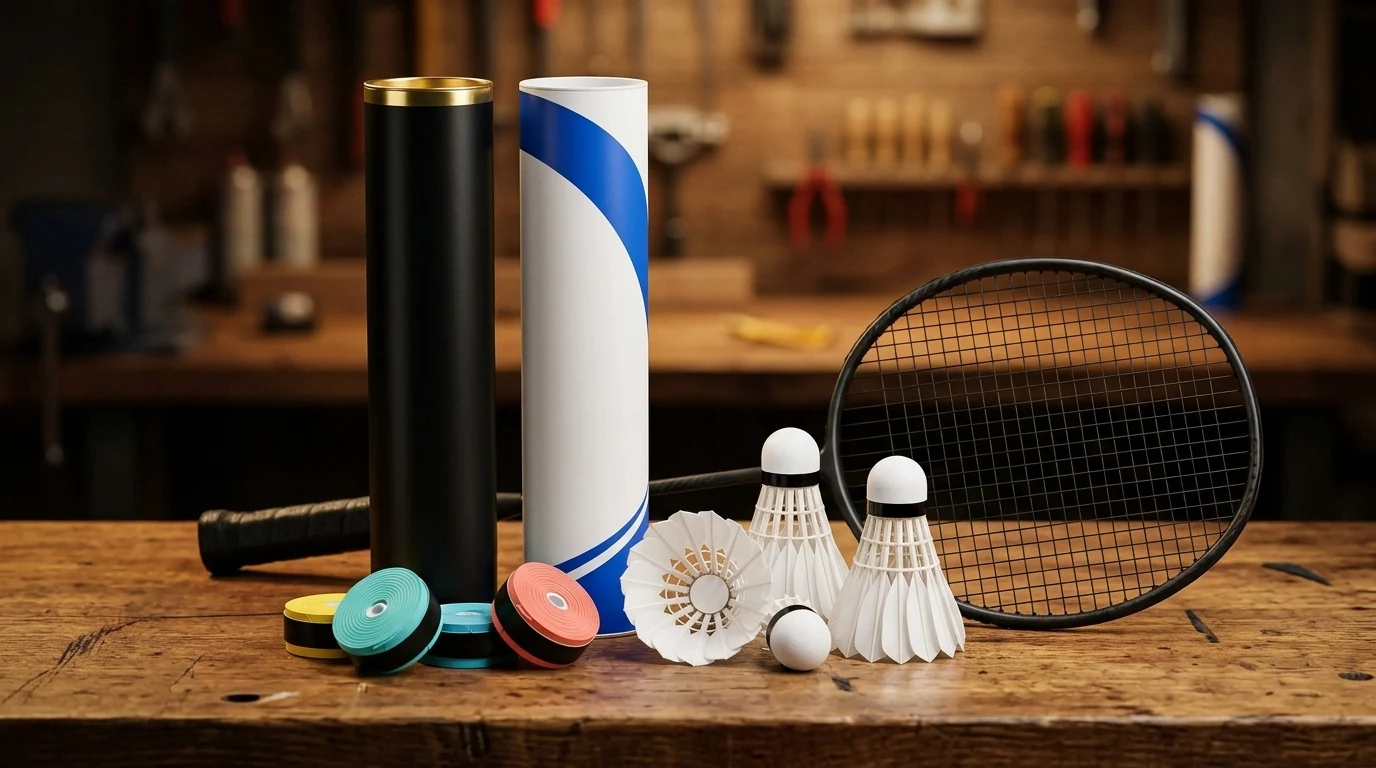
Packing strings, overgrips and rackets alongside shuttlecock cartons
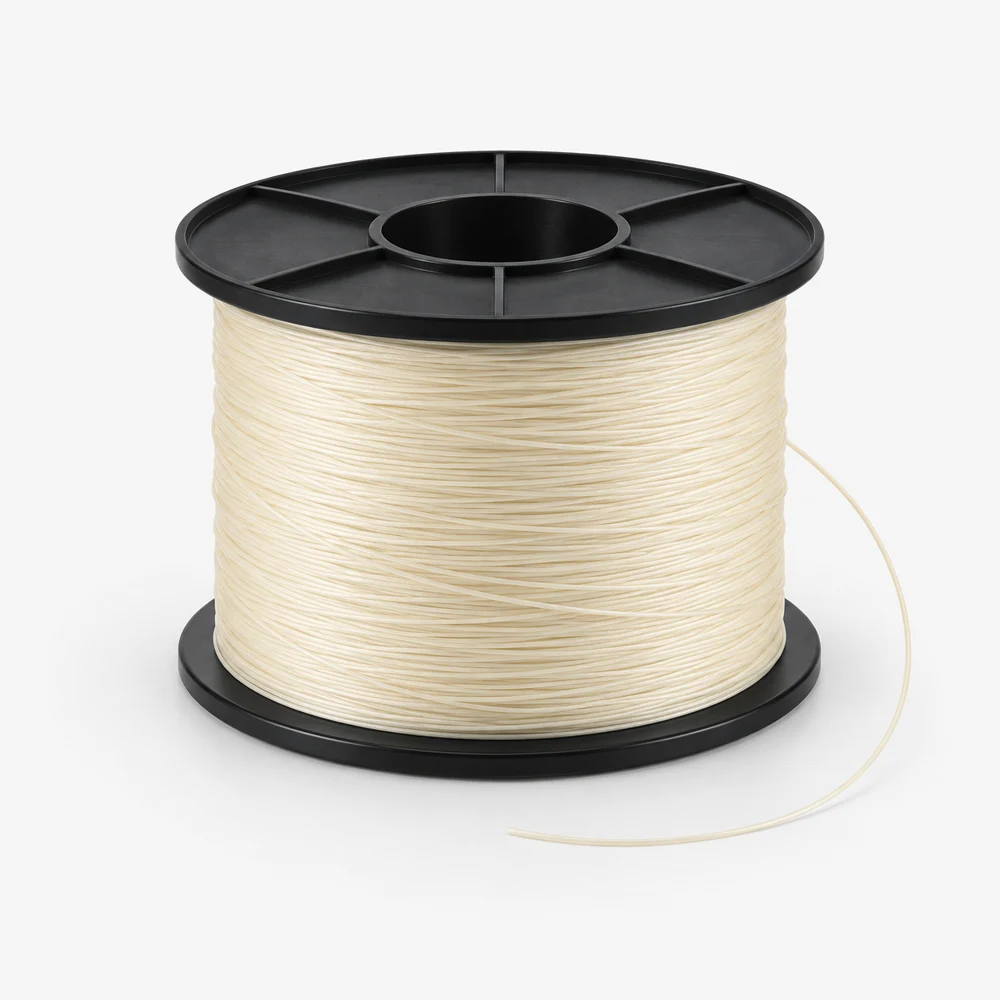
Badminton strings (200 m reels / 10 m sets) and PU overgrips are compact and dense. Consolidating strings, grips and rackets with your shuttlecock cartons spreads customs clearance fees across more SKUs and improves cargo density—which is why our procurement desk consolidates multi-factory shipments into one bill of lading.
FREIGHT MODE BREAKEVEN MATRIX
Air courier vs. air cargo vs. LCL sea freight for feather shuttlecocks
Comparison of express air courier, airport air cargo and LCL sea freight by carton quantity, chargeable weight and transit time
Shipping Mode
Sweet-Spot Order Volume
Billing Basis
Typical Transit Window
Best Use Case
Air Courier (DHL / FedEx / UPS)
1–4 sample tubes or 1–3 cartons
Volumetric weight (L×W×H ÷ 5000 = ~19.2 kg/ctn)
4 – 8 business days door-to-door
Court samples & urgent club refills
Commercial Air Freight / DDP Air
3 – 12 cartons (150 – 600 tubes)
Volumetric weight (÷ 6000 = ~16.0 kg/ctn)
7 – 14 days door or airport
Seasonal club replenishment
LCL Sea Freight (Consolidated)
5 – 60 cartons (0.5 – 5.8 m³)
Per cubic meter (CBM, min. 1 m³)
18 – 38 days port/door
Best landed cost for 500–3,000 tubes
FCL Container (20GP / 40HQ)
280 – 680 cartons
Flat container rate
18 – 35 days port-to-port
National distributors & OEM brands
TECHNICAL FAQ
Key questions answered.
Direct engineering and wholesale procurement answers for international buyers.
How many shuttlecocks are inside one tube and one master carton?
One standard wholesale tube contains 12 shuttlecocks (1 dozen), and one export master carton holds 50 tubes (600 shuttlecocks total).
How big is a feather shuttlecock in cm?
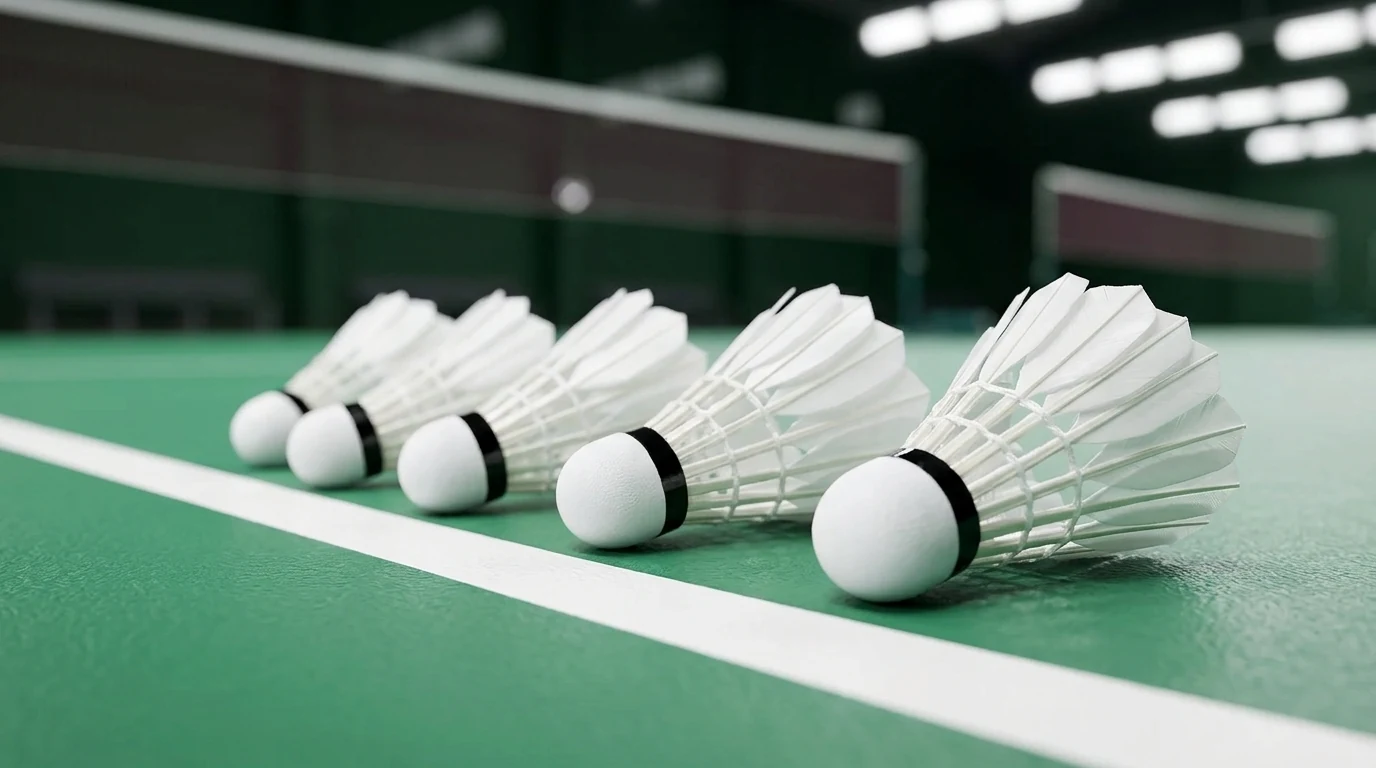
A regulation BWF feather shuttlecock measures roughly 8.5–9.0 cm in total height, with 6.2–7.0 cm feathers, a 6.5–6.8 cm skirt diameter and a 2.5–2.8 cm cork base.
What is the CBM and gross weight of a 50-tube shuttlecock carton?
A standard 50-tube carton measures approximately 67 × 35 × 41 cm (~0.096 CBM), with ~9.5 kg net weight, ~11.0 kg gross weight and ~19.2 kg air courier volumetric weight.
When does sea freight become cheaper than air courier for shuttlecocks?
Air courier is fastest for 1–3 cartons; from 5–10 cartons (250–500 tubes, ~0.5–1.0 CBM) upward, LCL sea freight or DDP sea delivery usually cuts per-tube shipping cost by 40%–65%.
What HS code is used for importing feather shuttlecocks?
Badminton shuttlecocks generally classify under HS code 9506.69 (balls/shuttlecocks for sports), while badminton rackets classify under 9506.59. Always verify exact subheadings with your local broker.