Durability & Care7 min read · Updated Nov 19, 2026
How to steam & store feather shuttlecocks: 8–12% moisture & humidity conditioning guide.
Dry heated halls turn brittle natural waterfowl rachises into 3-rally casualties. Use this factory-verified steaming timer, 24-hour rest protocol and 50–65% RH storage guide to extend tube lifespan by 30–50% without softening cork glue.
Why dry feather shafts snap on the first hard smash
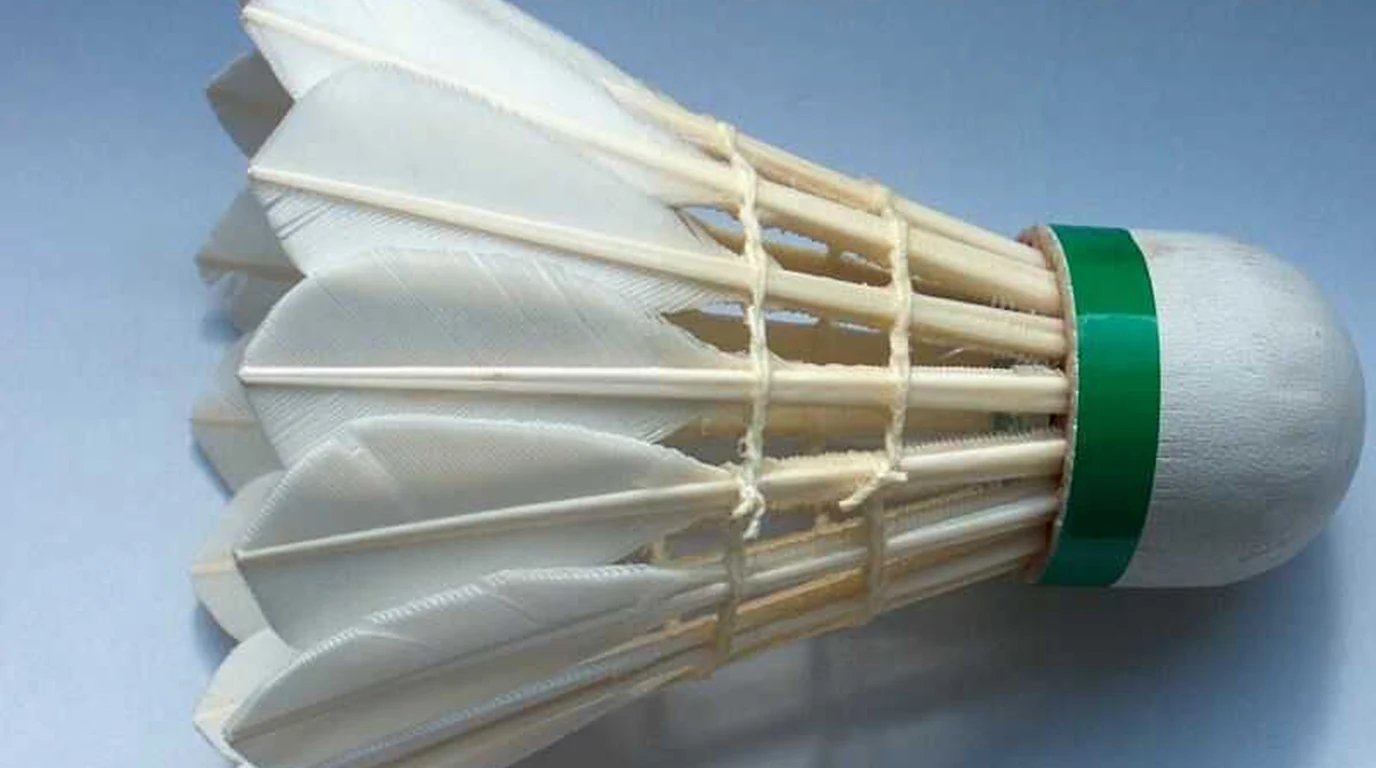
Natural goose and duck quills are keratin structures engineered to flex on impact when internal moisture stays between 8% and 12% by weight. In winter, indoor heating drops gymnasium relative humidity below 25–30% RH. Within 48 hours of opening an unlined tube, feather moisture falls below 6%, making the rachis glass-brittle. Properly restoring moisture to 9–11% allows the feather vane to bend and rebound after 350 km/h smashes instead of fracturing cleanly at the string collar.
02 / ZERO-RISK STEAMING METHOD
Kettle steam vs. cold humidifier: why the 24-hour rest matters
Never steam shuttlecocks 10 minutes before stepping on court—hot moisture softens both the resin glue around the cork holes and the thread varnish, causing the skirt to flare permanently and fly 30 cm slow. Instead, remove both end caps 24 hours before club night, hold the feather end 10 cm above gentle kettle steam for 8–15 seconds (never boiling-hot direct contact), recap immediately, and let moisture equalize overnight. Even safer for large clubs is a 60% RH sealed plastic bin with a calibrated sponge humidifier holding 20–30 open tubes for 24 hours.
03 / ALUMINUM FOIL TUBES & SEA FREIGHT
How export packaging preserves factory moisture across oceans
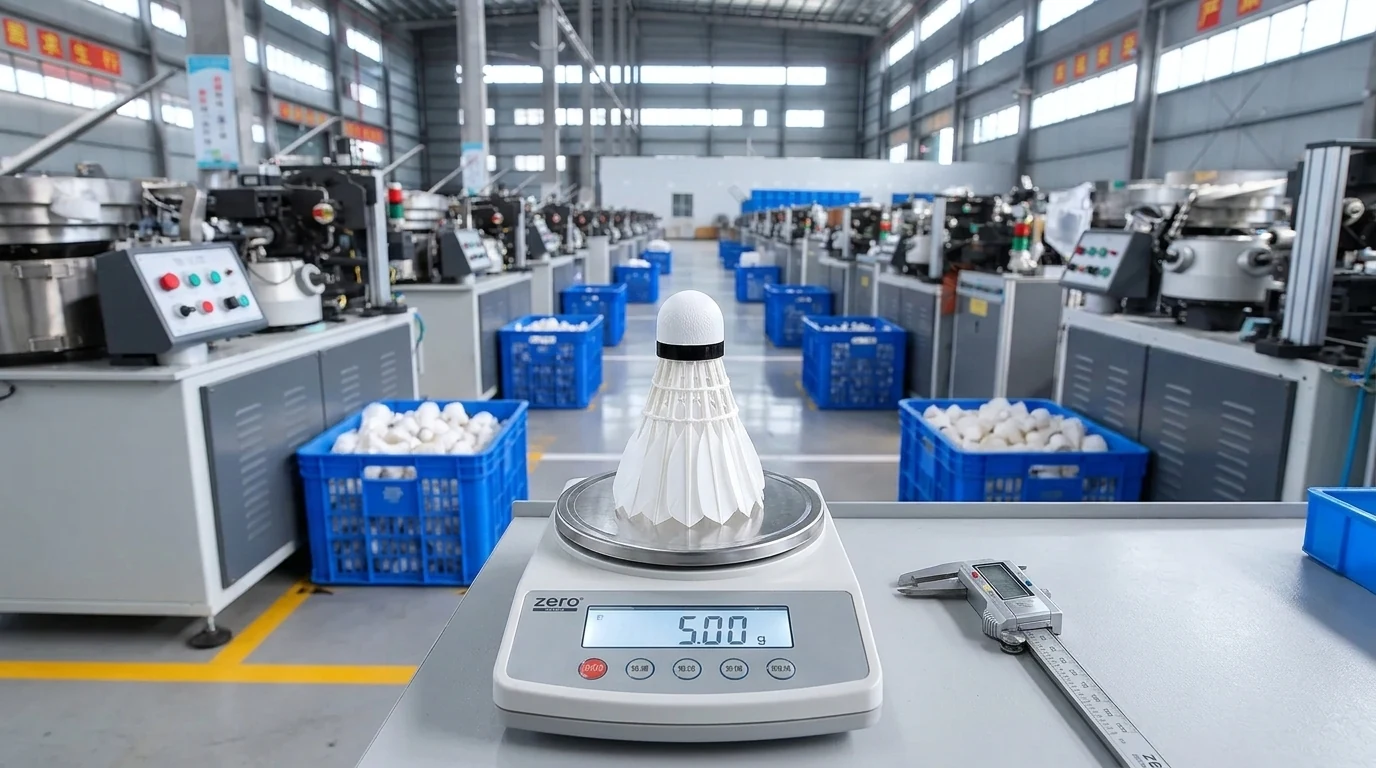
Factory-fresh feather shuttlecocks leave our Anhui & Zhejiang conditioning rooms calibrated to 8–12% moisture and sealed inside aluminum foil-lined paper tubes. Compared with unlined cardboard tubes, foil-lined walls cut moisture transmission by over 80% during 30–40 day ocean voyages and dry warehouse winters. Pair foil-lined tubes with dry-plucked goose or Grade 1 Cigu duck models such as Huiyu Master No.1, Durable No.1 or Tingcheng TCX6000 for peak cold-hall longevity.
CLUB & WAREHOUSE STORAGE STANDARDS
Short-term club storage vs. 6–12 month wholesale warehouse guidelines
Temperature, relative humidity, tube orientation and carton stacking rules for natural feather shuttlecocks
Storage Parameter
Club Pro-Shop (1–3 Months)
Wholesale Warehouse (3–12 Months)
Sea Container Transit (25–45 Days)
Risk if Ignored
Target Temperature
15 – 22 °C (away from radiators)
16 – 20 °C climate-stable room
Lined 20GP/40HQ away from roof
Glue softening above 32 °C
Target Humidity (RH)
50% – 65% RH
55% – 60% RH + hygrometer log
Foil-lined tubes + carton desiccants
<35% brittle; >75% slow/moldy
Tube Orientation
Vertical, cork facing DOWN
Vertical, cork facing DOWN
Standard upright carton arrows
Feather cone warp under gravity
Max Carton Stacking
Up to 3 cartons high
Max 5–6 cartons (≤ 2.2 m)
Palletized or interlocked 5 high
Crushed bottom tubes & split seams
Stock Rotation (FIFO)
Rotate every 30 days
Strict First-In, First-Out (6–9 mo)
Check batch code on carton mark
Dried-out aged shafts & yellowed glue
TECHNICAL FAQ
Key questions answered.
Direct engineering and wholesale procurement answers for international buyers.
Does steaming shuttlecocks make them heavier or slower?
Only if over-steamed or played immediately while still warm and wet. A brief 8–15 second steam followed by a 24-hour capped rest restores natural 9–11% flexibility while adding less than 0.04 g—preserving normal speed 77/78 flight distance.
Should I store feather shuttlecock tubes upright with corks up or down?
Always store tubes vertically with the cork heads pointing DOWN. Because the cork represents roughly 60% of the shuttlecock’s mass, storing cork-down prevents gravity from compressing the delicate feather tips of the shuttle nested underneath.
Can I steam shuttlecocks in tropical countries like Indonesia, Thailand or Malaysia?
No. Indoor halls in Southeast Asia typically exceed 65–80% RH, so feathers already absorb ambient moisture. Steaming in humid climates makes shuttles heavy, sluggish and prone to mildew—focus instead on airtight foil tubes and dry storage.
How long can wholesale feather shuttlecocks be stored in a warehouse?
When kept in sealed aluminum foil-lined tubes at 16–20 °C and 55–60% RH, goose and Cigu duck feather shuttlecocks retain full flight and durability performance for 9–12 months under FIFO rotation.
Which feather grade tolerates dry winter halls best?
Thick-shafted northeastern goose feather models (such as Huiyu Master No.1, Master S, Durable No.1 and Tingcheng TCX6000) and full-round Cigu duck models (Huiyu Tournament No.1, H1) outlast thin water-duck training shuttles by 2× in dry heated halls.