Materials & Specs7 min read · Updated Nov 19, 2026
Full natural vs. composite cork shuttlecocks: 3-layer, 2-layer & solid cork compared.
A shuttlecock’s cork head accounts for roughly 60% of its total weight and controls acoustic snap, net-shot touch and smash stability. Compare all three factory cork constructions across 44 stocked wholesale models.
60% of shuttlecock weight lives inside the 25–28 mm base
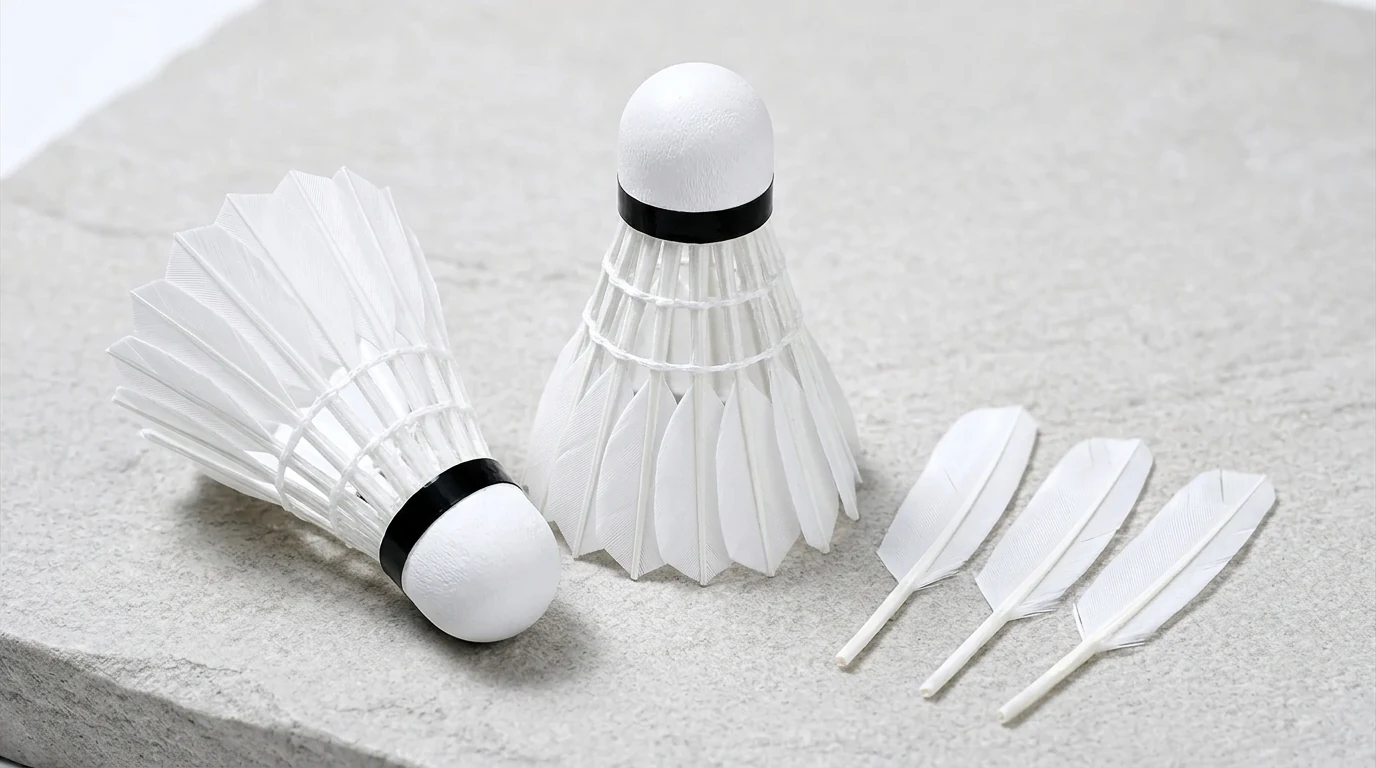
Under BWF Law 4, a feather shuttlecock weighs 4.74–5.50 g with a rounded cork base measuring 25–28 mm in diameter. Roughly 2.9–3.2 g of that mass sits inside the cork head, setting the forward center of gravity that flips the shuttle nose-first within 0.02 seconds of leaving the string bed. Uneven cork density causes erratic wobble even when all 16 feathers are Grade 1 goose blades.
02 / SOLID NATURAL VS. 3-LAYER SANDWICH
When clubs should upgrade to solid natural or 3-layer cork
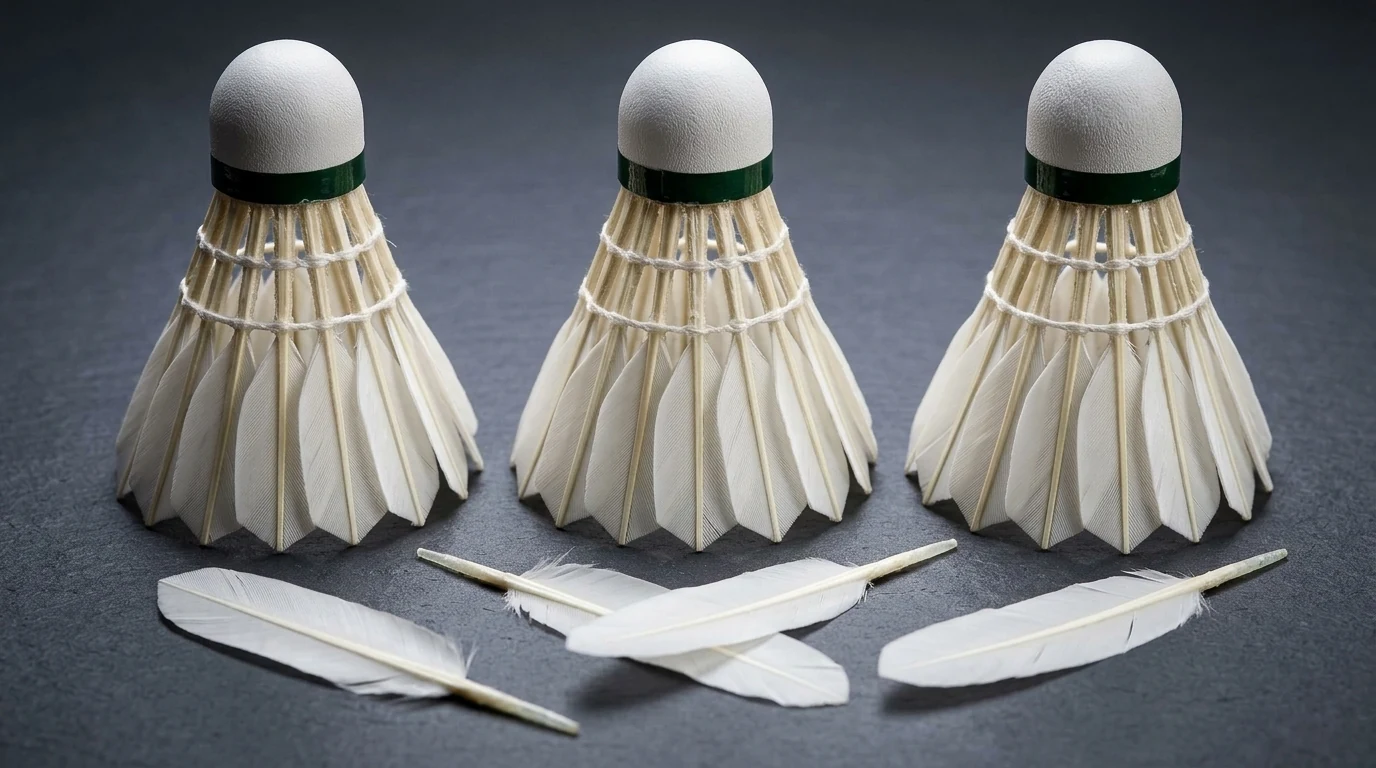
Solid single-piece natural cork offers unmatched elastic recovery: repeated 28–30 lb tension smashes never dent the strike face or loosen feather drilling holes. However, solid cork requires premium thick bark harvested from mature trees, placing retail equivalents above US$35–45/tube. For regional leagues seeking 95% of that crisp feedback at lower wholesale cost, 3-layer composite cork (natural cork impact dome bonded to a dense two-stage upper collar) delivers tournament trajectory with superior batch weight consistency.
03 / AVOIDING CHEAP FOAM-CORE COPIES
How to inspect cork quality before approving a bulk order
Budget practice tubes sometimes substitute soft EVA foam under thin paper skin, which flattens after five hard clears and feels dead off the strings. During pre-shipment QC, press the rounded impact tip firmly with a thumbnail—a true natural or 2-layer composite cork rebounds instantaneously without leaving a dent—and slice one sample head per batch to confirm solid natural cork at the strike dome rather than hollow sponge foam.
STOCKED WHOLESALE MODELS BY CORK TYPE
Mapping Huiyu & Tingcheng shuttlecock models to cork head specs
Live stocked Huiyu and Tingcheng shuttlecock models grouped by cork head construction and USD wholesale pricing
Direct engineering and wholesale procurement answers for international buyers.
What is the difference between 2-piece and 3-piece composite cork shuttlecocks?
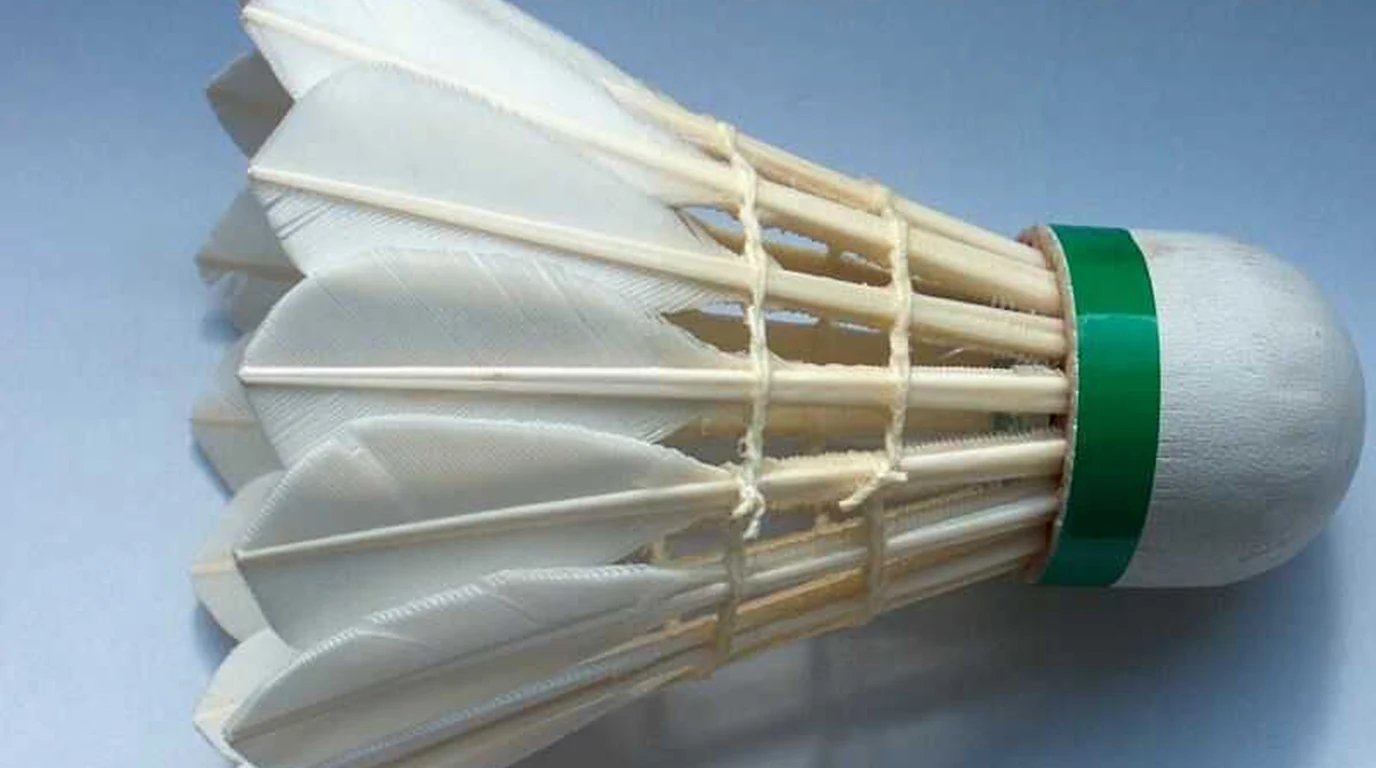
A 2-layer (2-piece) composite head bonds a natural cork strike base to a compressed cork/fiber upper collar where the 16 feather holes are drilled. A 3-layer (3-piece) head adds a dedicated natural cork middle buffer ring, noticeably improving acoustic snap, smash resilience and long-rally flight stability.
Is full natural cork always better for daily club practice?
Not economically. Full natural cork (US$27.53–US$30.67/tube wholesale) is ideal for tournaments and advanced league matches. For regular club nights, 2-layer composite cork paired with Grade 1–2 Cigu duck or club goose feathers (US$11.18–US$18.92/tube) cuts per-session costs by 35–55%.
Does cork type change shuttlecock speed (75–79)?
Yes—slightly. Higher-density natural cork concentrates weight cleanly at the nose, creating a crisper initial acceleration and cleaner parabolic drop than lightweight foam substitutes of the same nominal gram weight.
How do factories prevent feathers from loosening in composite cork heads?
High-density upper collars are CNC-drilled at exact 360° angles (±0.2 mm tolerance), injected with calibrated resin adhesive and cured in climate-controlled racks before double-thread stitching and flight grading.
Which stocked models use full natural cork or 3-layer composite cork?
Huiyu Master Ultra (US$27.53/tube) and Tingcheng TCX PRO (US$30.67/tube) use solid full natural cork, while Huiyu Master S (US$25.81/tube) and Tingcheng TCX ACE / TCX999 / TCX888 (US$25.13–US$28.12/tube) feature 3-layer composite cork heads.